
Research that resulted in U-Prevent: ‘The average patient does not exist’
Between the theoretical question of whether clinical data can be used to estimate cardiovascular risks for individual patients and the medical tool U-Prevent as it exists today lies a great deal of very high-level research. That research and numerous collaborative projects have led, among other things, to U-Prevent being included in the European Society of Cardiology (ESC) guideline on Cardiovascular Risk Management (CVRM). Co-initiator Jannick Dorresteijn outlines the origins of U-Prevent.
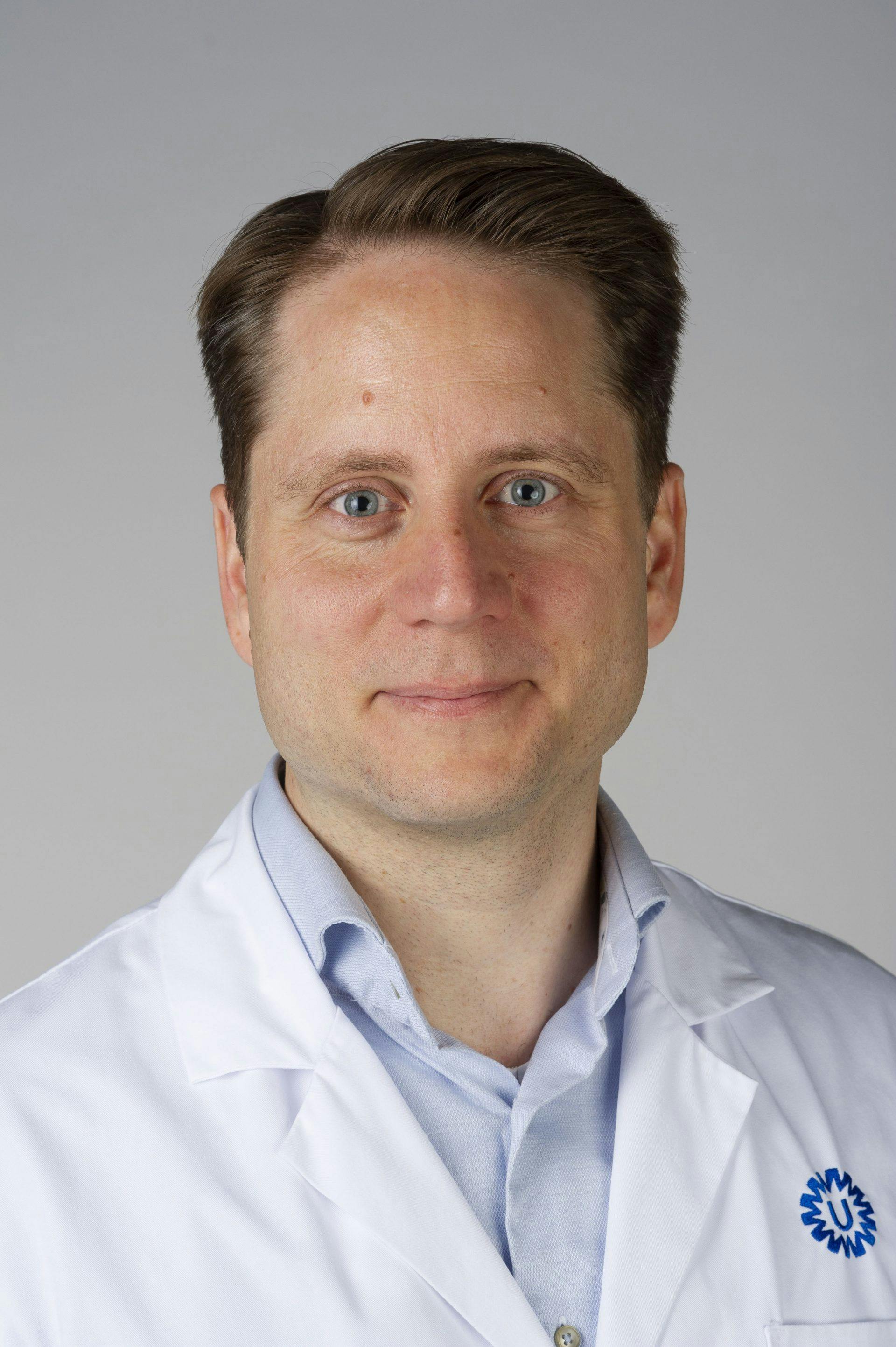
Interview with Jannick Dorresteijn, internist at UMC Utrecht and co-initiator of U-Prevent
After graduating in 2009, Jannick Dorresteijn found himself, “more or less by chance,” at a symposium on prediction, held on the occasion of Harvard professor Paul Ridker receiving an honorary doctorate from Utrecht University. “The symposium was organized by Frank Visseren and Yolanda van der Graaf. Following that, we started thinking about the many large studies conducted in medicine, so-called randomized controlled trials, in which thousands of people are followed for years. Of course, those studies provide a wealth of information. Traditionally, all that data is analyzed and distilled into a single number. At the time, we asked ourselves: can we do more with all that information? Can we use data more effectively to make statements about individual people?”
Harvard Research
Dorresteijn was subsequently invited, as a PhD candidate in vascular medicine, to come to Boston. There he worked with Harvard colleagues on studies such as the JUPITER trial, on the effect of cholesterol-lowering medication, and the Women’s Health Study, which compared aspirin with placebo in healthy women. “We looked at whether we could use those data in a meaningful way for the individual patient, using an algorithm. The average effect of such a trial applies to absolutely no one, because the average patient does not exist. There are people within the group who benefit more than average from a treatment, and people who benefit less. The challenge is to identify the group that benefits more than average. After all, that is what you try to assess as a physician in the consultation room for every patient.” The difficult thing about cardiovascular prevention, Dorresteijn explains, is that you are trying to prevent something that may happen far in the future. “You need an algorithm to estimate how large that probability is. That is something quite different from assessing a CT scan, for which algorithms are also used.” The use of algorithms in medicine was not new even before Dorresteijn and his colleagues started in Boston: “They were already being used on a limited scale, but were really only applicable to healthy middle-aged people. Over time, we discovered that it is also very possible to use these kinds of algorithms for people who already have vascular disease or diabetes, as well as for people over the age of 70.”
“The challenge is to identify the group that benefits more than average from a treatment. That is what you try to do as a physician in the consultation room for every patient.”
Clinical Practice
The research questions posed by Visseren and Dorresteijn arose in their own consulting rooms at UMC Utrecht. Both are not only researchers, but also vascular internists. They increasingly felt the need to apply preventive treatment options selectively to the patients who would benefit most. They also wanted to inform patients personally about the individual effect of medication, so they could make well-informed decisions together. Their research therefore focused on whether mathematical algorithms could be developed that were applicable in practice for large groups of patients. “The breakthrough came when we started combining existing methodologies and looking at data from a different perspective. Previously, an algorithm could only look a limited time into the future, usually 5 to 10 years, because large studies are designed for that kind of time frame. But instead of looking at the time someone spends in the study, we started looking at the age at which someone entered and left the study. By using age as the time scale, you can look much further ahead and calculate lifetime risks. In this way, we made steady progress in the methodology and built more and more collaborations with other researchers, resulting in a very large network and access to an enormous amount of data, and ultimately in U-Prevent.” The researchers were able to prove conclusively that it was theoretically possible to personalize the risks of cardiovascular disease and the effects of treatments on the basis of existing data. After that, a great deal of additional knowledge was gathered. By continuously investigating how the reliability of predictions could be improved, development progressed further — “until,” says Dorresteijn, “we reached a point where we said: this is so good, it has to move into clinical practice.”
“ The breakthrough came when we started combining existing methodologies and looking at data from a different perspective.”
Continuous Improvements
Within the European Society of Cardiology (ESC), experts in the field from across Europe have joined forces in the Cardiovascular Risk Collaboration (CRC) to jointly develop mathematical algorithms that can be recommended by European guidelines. “In 2021, the updated version of the SCORE table from 2003 was published. The earlier version was outdated and not well calibrated for use in Eastern Europe. The new SCORE2 can be applied throughout Europe and predicts not only the risk of death, but also the risk of having a heart attack or stroke. In addition, a comparable score was developed for older people aged 70 to 89, making it possible to reliably estimate cardiovascular risk for that group as well. And for patients who already have vascular disease, the SMART2 risk score was developed by the CRC. This algorithm was derived from the Utrecht SMART cohort study and is now being used throughout Europe. That is important, because there are many more treatment options nowadays than there used to be, especially for patients with vascular disease. But who benefits from what? The SMART2 algorithm calculates that. The ESC guideline that recommends U-Prevent and the algorithms we developed is now the prevailing standard, and I am quite proud of that.” He is also proud of the large number of U-Prevent users: “It was a major step to turn algorithms into a calculator. U-Prevent receives many compliments, and we continue to improve the tool. Recently, we investigated what you should do if you do not know something about a patient that you nevertheless have to enter into the model. One variable in the SMART2 risk score, for example, is the CRP value; that is not measured routinely. If, in such a case, you enter the average value for that group, the estimate is not significantly affected. Research shows that it remains reliable. That too is another step forward.” A further step that has already been realized is that additional information about the patient that is not included as standard in the U-Prevent model can nevertheless be added to the risk estimate calculated by the algorithm. “That will provide considerable additional ease of use and make the algorithm more applicable to larger groups of patients.”
“ The ESC guideline that recommends U-Prevent and the algorithms we developed is now the prevailing standard, and I am quite proud of that.”
Opportunities in General Practice
Physicians naturally always approach their patients as individuals, and treatments are therefore already individualized, Dorresteijn emphasizes. “What is new about our approach is that you can substantiate numerically how effective the treatment is and then discuss that with each other. In other words, you can further personalize a treatment that is already personalized.” The algorithm is certainly not intended to replace the Dutch CVRM guideline: “The purpose of U-Prevent is to support healthcare professionals in implementing the guideline. Nor is the guideline a legal code: the patient always has the final say. The guideline describes what you should present to the patient and what you should discuss in order to arrive at the right decision for each person. In two comparable cases, the best decision may be different.” He believes there are still major opportunities in general practice and in the appropriate use of algorithms: “How can we determine early, in a healthy population, who is at risk of cardiovascular disease and then offer those people preventive care? A collaboration with researchers from Leiden University is now under way in this area, to see whether we can use U-Prevent for population health management. That means reviewing general practitioners’ patient databases to identify high-risk patients. They can also be detected using blood pressure or glucose values measured by patients themselves at home, or by having cholesterol tested once at the supermarket. If an algorithm picks that up and qualifies someone as ‘high risk,’ the general practitioner no longer has to actively screen for it. That saves GPs a great deal of work.”
“ What is new about our approach is that you can substantiate numerically how effective the treatment is and then discuss that with each other.”
About Jannick Dorresteijn
Jannick Dorresteijn studied medicine (2009) and epidemiology (2011) at Utrecht University. His doctoral research focused on personalizing the treatment of cardiovascular disease on the basis of mathematical models. He carried out part of this research at Harvard University, and in 2013 it led to a cum laude PhD from Utrecht University. He completed his training as an internist (2012–2019) at Diakonessenhuis Utrecht and UMC Utrecht. In 2016, he received a Dekker grant from the Dutch Heart Foundation to continue his research. This research resulted in the 2018 launch of https://U-Prevent.nl, a website that makes mathematical models for tailored preventive cardiovascular medication available for use in the consultation room. From 2019 to 2020, he worked as an internist and vascular medicine specialist at Rijnstate Hospital in Arnhem, and since 2020 he has worked at UMC Utrecht.
